
Venezuela is rarely observed as a country dominating global headlines, yet when geopolitics, oil supply constraints, and sanctions converge, financial markets take notice. In present scenario marginal supply risks has outsized effects in an already tight energy market.
Global energy Majors
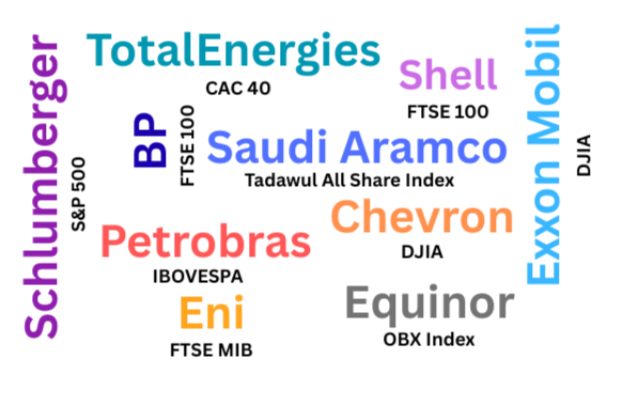
Global energy majors have their valuations and earnings fundamentally linked to long term access to oil and gas resources. Saudi Aramco anchors the group through its vast reserves and low-cost production base, while US supermajors Exxon Mobil and Chevron remain closely tied to global resource availability and crude price dynamics. European integrated players Shell, BP, TotalEnergies, and Eni rely on geographically diversified portfolios of oil and gas assets, leaving them sensitive to disruptions in politically complex regions. Exposure to resource rich emerging markets is reflected through Petrobras and Equinor, where production is closely linked to domestic policy. Schlumberger meanwhile offers indirect exposure as constraints on resource availability and tighter supply conditions tend to drive higher upstream investment.
Venezuela’s Gold Holdings
Beyond oil, Venezuela also holds meaningful gold asset adding an important dimension to its broader commodity profile. Officially, Venezuela’s central bank has reported gold reserves of roughly 160 tonnes, placing the country among the larger gold holders in Latin America. These holdings form a significant share of Venezuela’s remaining foreign exchange reserves and have historically played a role in supporting liquidity during periods of financial stress and sanctions.
That said, Venezuela’s gold position has become increasingly complex in recent years. Independent estimates suggest that reported reserves have declined from earlier peaks. Beyond official reserves, Venezuela is also home to substantial geological gold resources, particularly within the Orinoco Mining Arc.
Bottomline
Potential escalation involving Venezuela introduces a layered set of risks for global markets, with energy supply disruption representing the most immediate and high-impact channel. Even limited tensions can push oil prices higher, reinforcing energy-driven inflation pressures and increasing demand for safe-haven assets such as gold and the US dollar. Beyond commodities, heightened uncertainty typically weighs on emerging-market equities and currencies, particularly in Latin America, while also widening credit spreads as investors reprice sovereign and political risk. Equity markets often respond through sector rotation, favouring energy and defensive stocks at the expense of transport, consumer discretionary, and other fuel-sensitive sectors. Over time, sustained commodity price pressures can complicate the inflation outlook and influence central-bank policy expectations, amplifying volatility across asset classes.
Sources: , (Q3 2025 results), .
This article is for informational purposes only and does not constitute investment advice.